Also known as: paddle play, paddling
Heightened riskWhat is Paddles?
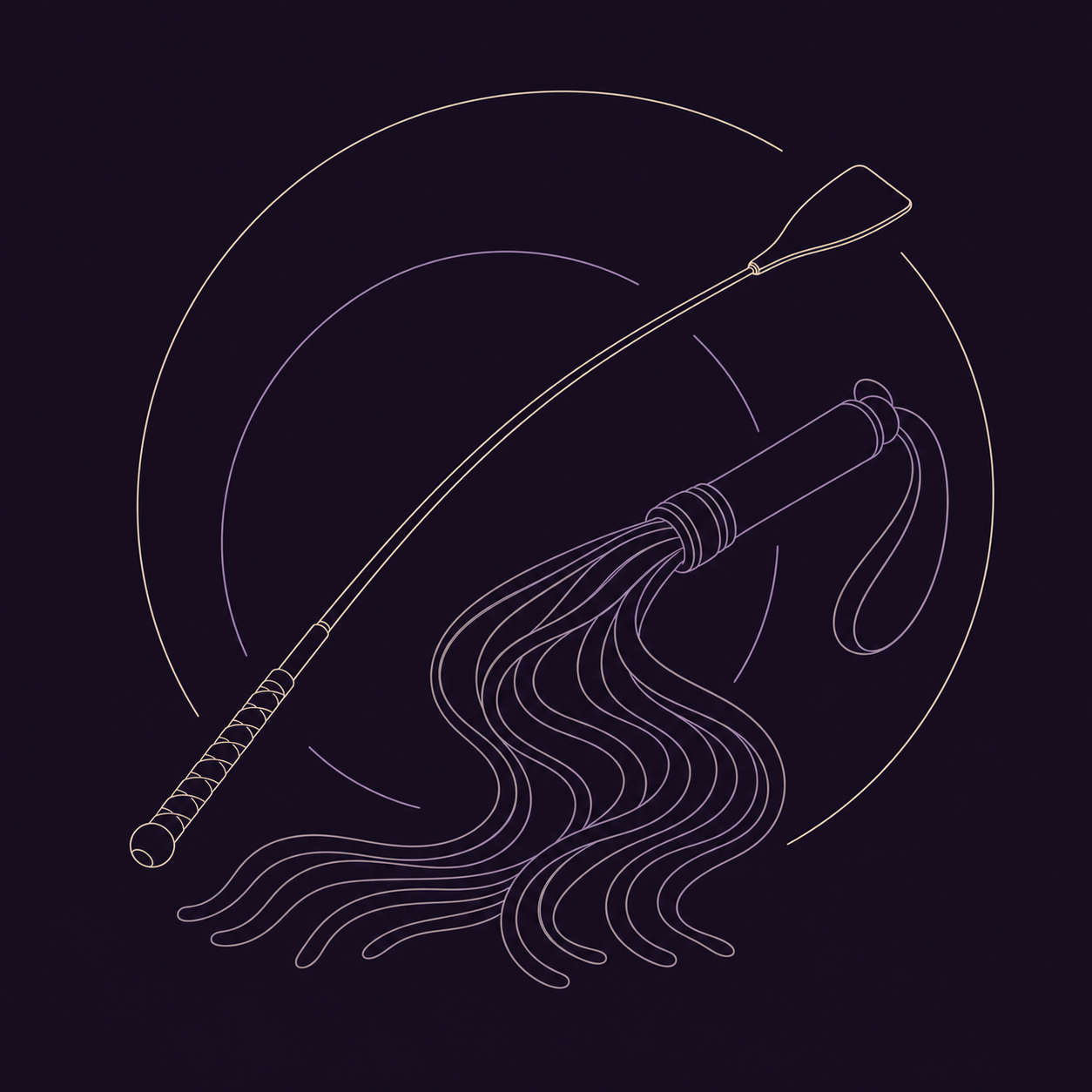
Paddles are blunt impact tools used in consensual BDSM scenes to deliver repeated or single strikes across fleshier areas of the body. They are popular because they are easy to hold, easy to read visually, and easy to calibrate compared with some other implements. A paddle scene may be soft and rhythmic, strict and discipline-flavored, or more sensation-focused. What makes paddles work well is the combination of clear negotiation and predictable contact. Adults often choose paddles when they want a more defined thump than a hand spanking, or when they want the option to vary the scene without changing tools.
What it is distinct from
Different from flogging or spanking: paddles usually create a broader, more percussive impact with a flatter tool, rather than a hand or flexible implement.
Common variations and contexts
- Leather paddles for a mix of thud and sting
- Wooden paddles for a firmer, louder impact feel
- Silicone or foam paddles for lighter sensation and easier control
- Novelty paddles with cutouts, embossing, or decorative shapes
- Discipline or instruction-themed scenes where the paddle is symbolic as well as sensory
- Warm-up or finishing tool in an impact-play scene
Why people may explore it
People may enjoy paddles for the sound, the anticipation, the clear physical feedback, or the ritual of negotiation and control. Some like the broad, unmistakable contact; others like that paddles can be used gently and adjusted more easily than many other impact tools. For some adults, the appeal is also psychological: it can feel structured, ceremonial, or intentionally intense without needing complicated equipment.
Consent and communication
Explicit consent matters before any impact scene. Adults should agree on who is striking, where strikes may land, what intensity ranges are acceptable, how many strikes are planned if any, and what words or signals mean pause, slow down, or stop. Consent should be revisitable during the scene. If a person is unsure, unable to speak freely, intoxicated, pressured, or hesitant, do not proceed. Do not use paddles in a way that targets genitals, the head, neck, spine, kidneys, or joints unless you are discussing and avoiding those areas entirely; safer practice is to keep strikes to fleshy, less vulnerable areas and to stay within the agreed intensity. If a strike causes sharp pain, loss of sensation, dizziness, or a cut, stop and reassess.
Words someone might use
‘I’d like paddle play tonight. Light to medium, no marks beyond a little redness.’ ‘Can we keep it to my thighs and lower hips?’ ‘Please check in after every set.’ ‘Yellow if you want me to slow down, red to stop.’ ‘I’m not up for bruising today.’
Safety and risk awareness
Impact play carries a real risk of bruising, swelling, nerve irritation, skin damage, and accidental injury. Use a paddle only with sober, attentive partners and with explicit boundaries. Start lighter than you think, check the skin and the person’s verbal and nonverbal responses, and stop if the scene drifts outside the agreement. Avoid the face, throat, neck, spine, kidneys, joints, and any area that feels bony or medically sensitive. Because harder paddles can leave more significant marks, be mindful of timing if the person needs to appear unmarked for work, family, travel, or medical reasons. Seek medical care if there is severe pain, substantial swelling, numbness, a deep bruise that expands quickly, trouble walking, or any sign of more serious injury.
Aftercare and follow-up
Aftercare for paddles often includes water, a calm check-in, reassurance, and time for the body to settle. Many people like warmth, gentle touch if welcome, blankets, or quiet conversation. Some prefer topical comfort measures only if they have already agreed to them. After an intense scene, it can help to inspect the skin together, note any marks, and talk about what felt good, what felt too much, and what to change next time. Emotional aftercare matters too: a brief debrief can prevent misunderstandings and help both partners feel cared for.
Common misconceptions or contested usage
A common misconception is that a paddle scene is ‘simple’ because the tool is simple; in reality, impact play still needs skill, communication, and post-scene care. Another myth is that bruising is a requirement. It is not. Many people enjoy paddles without visible marks. Some communities also use ‘paddle’ loosely to describe any broad striking tool, but the sensation and risk profile change a lot by material and weight.
Sources and further reading
- Planned Parenthood: Sexual Consent — Clear, accessible overview of consent as active, informed, revocable agreement.
- NCSF Consent Counts — Kink-specific consent guidance, including explicit prior permission and negotiated boundaries.
- Scarleteen Sex Readiness Checklist — Useful for thinking through readiness, communication, and whether you can say yes, no, or maybe.
- American Counseling Association: Kink Culture — Professional overview of consensual BDSM and negotiated power exchange.
Editorial note: This entry was prepared and maintained by the Orgasmaphoria editorial team. It is educational, applies only to consenting adults, and is not an instruction manual or medical guidance. No specialist credential is claimed unless a named qualified reviewer is explicitly shown.
Last reviewed July 28, 2026
Report a correction or source concern