Also known as: crop play, riding crop impact play, whip-adjacent impact play
Heightened riskWhat is Riding crops?
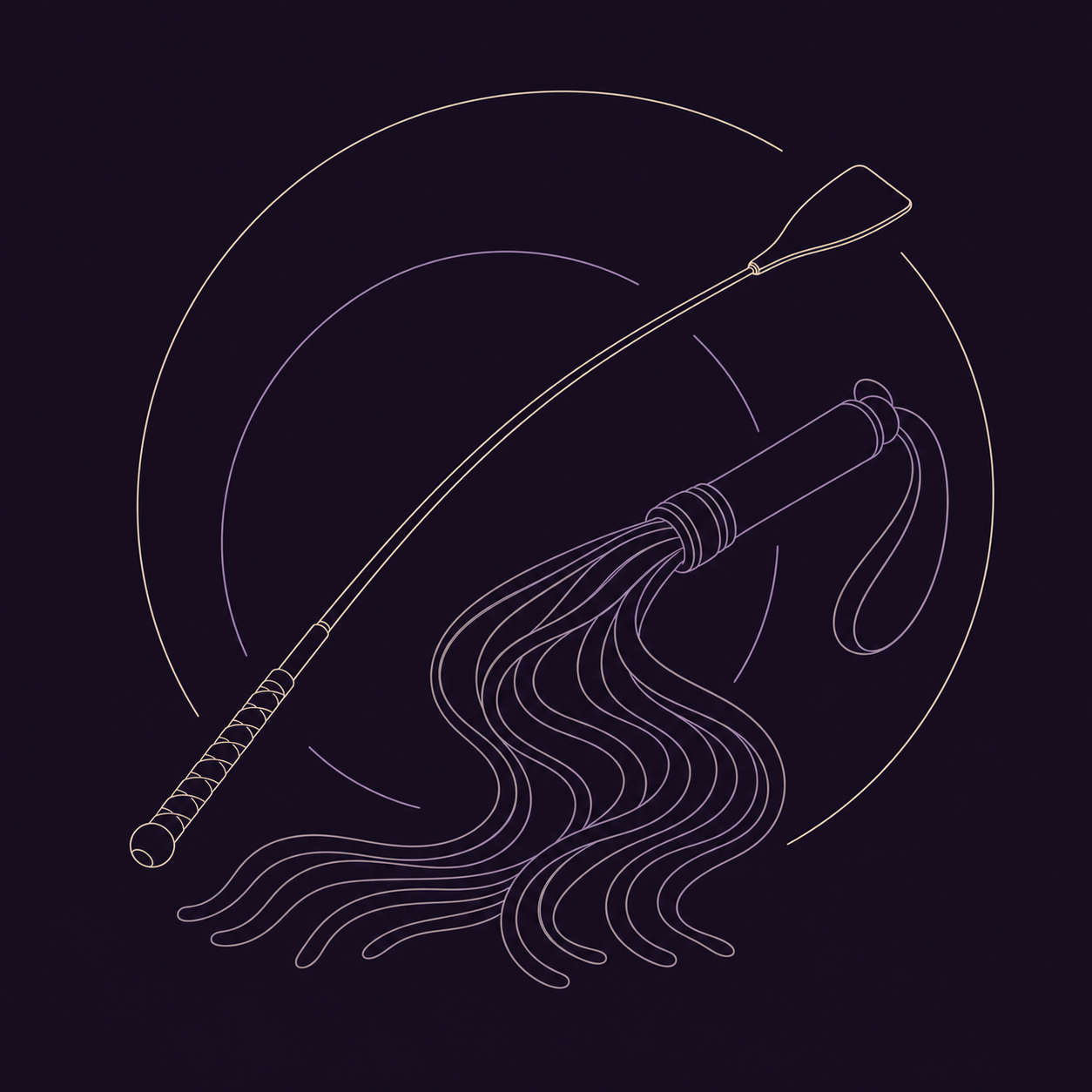
A riding crop is a narrow implement traditionally associated with equestrian use, now often adapted for consensual BDSM impact play. In kink settings it is usually used as a precise, controlled tool for sensation, discipline-themed roleplay, or power-exchange scenes. Compared with broader impact tools, a crop tends to deliver a smaller, more focused sensation. That makes it versatile, but it also means it can leave marks more easily and can be misused if the participants have not clearly agreed on intensity, target areas, and limits. Adult-only, explicit consent is essential.
What it is distinct from
Not the same as flogging or spanking: riding crops are usually narrower, firmer, and more precise, so the sensation is sharper and more localized. They are also distinct from whips, which can behave very differently in reach, speed, and injury risk.
Common variations and contexts
- Light tapping for sensation play
- Discipline-themed D/s scenes between consenting adults
- Aesthetic or symbolic use as part of a roleplay outfit
- Crop used alongside verbal cueing, rituals, or countdowns
- Purpose-built BDSM crops with different lengths, tips, or flexibility
Why people may explore it
People may be drawn to riding crops for precise sensation, the contrast of anticipation and impact, the theatrical look, or the way they fit power-exchange dynamics. Some prefer crops because they can be easier to target than broader implements, while others enjoy them as a visual or psychological signal rather than for heavy intensity.
Consent and communication
Use explicit, prior, and ongoing consent between consenting adults. Agree on what body areas are allowed, what intensity range is acceptable, whether marks are okay, whether language or roleplay will accompany the scene, and what signals mean slow down, stop, or check in. Consent should be revocable at any time. If you are negotiating a scene, a simple script can be: 'We’re both adults and we’ve agreed on crop play. I’m okay with light-to-moderate taps on agreed areas only, no face/neck/joints, and I want a stop signal respected immediately.'
Words someone might use
'Let’s keep crop play light and on the agreed areas only.' 'No face, neck, joints, or anything we didn’t talk about.' 'Marks are okay / not okay.' 'If I say yellow, slow down; if I say red, stop immediately.'
Safety and risk awareness
Risk is higher because the striking surface is small and force is concentrated. Common harms include bruising, welts, skin tears, flinching into unsafe areas, and hitting bony or sensitive regions. Avoid intoxication, rushed scenes, and playing through numbness or dissociation. Check the crop for damage before use, and discontinue if anyone’s judgment or communication becomes impaired. Be especially cautious with people who bruise easily, take blood thinners, have connective tissue concerns, or have recent injuries. If there is significant pain, swelling, deep bruising, loss of function, or concern about head, eye, neck, or abdominal injury, seek medical care.
Aftercare and follow-up
Aftercare may include a calm check-in, water, warmth or cooling as preferred, and looking over any areas that were struck for unexpected bruising or skin changes. Some people like reassurance, gentle touch, or quiet time; others prefer space first. Agree on aftercare before the scene, especially if the play is emotionally intense or tied to discipline, shame, or authority dynamics. Monitor bruises over the next day or two, and get medical attention if pain escalates or a mark looks abnormal.
Common misconceptions or contested usage
A common misconception is that a riding crop is 'safer' simply because it is shorter or more controlled. In reality, the small contact point can increase the chance of concentrated injury. Another misconception is that any BDSM implement can be used interchangeably; crops are distinct from whips and floggers in how they land and what they do to tissue. Also, consent is not implied by owning gear, by past scenes, or by a relationship label—each scene needs its own adult agreement.
Sources and further reading
- Planned Parenthood: Sexual Consent — Clear overview of affirmative, reversible, informed consent.
- NCSF Consent Counts — Kink-specific consent resources and best-practice language.
- Scarleteen Sex Readiness Checklist — Practical communication and readiness framework for adults and newer participants.
- American Counseling Association: Kink Culture — Context on kink as negotiated, consensual, and diverse adult practice.
Editorial note: This entry was prepared and maintained by the Orgasmaphoria editorial team. It is educational, applies only to consenting adults, and is not an instruction manual or medical guidance. No specialist credential is claimed unless a named qualified reviewer is explicitly shown.
Last reviewed July 28, 2026
Report a correction or source concern