Also known as: cane play
Heightened riskWhat is Caning?
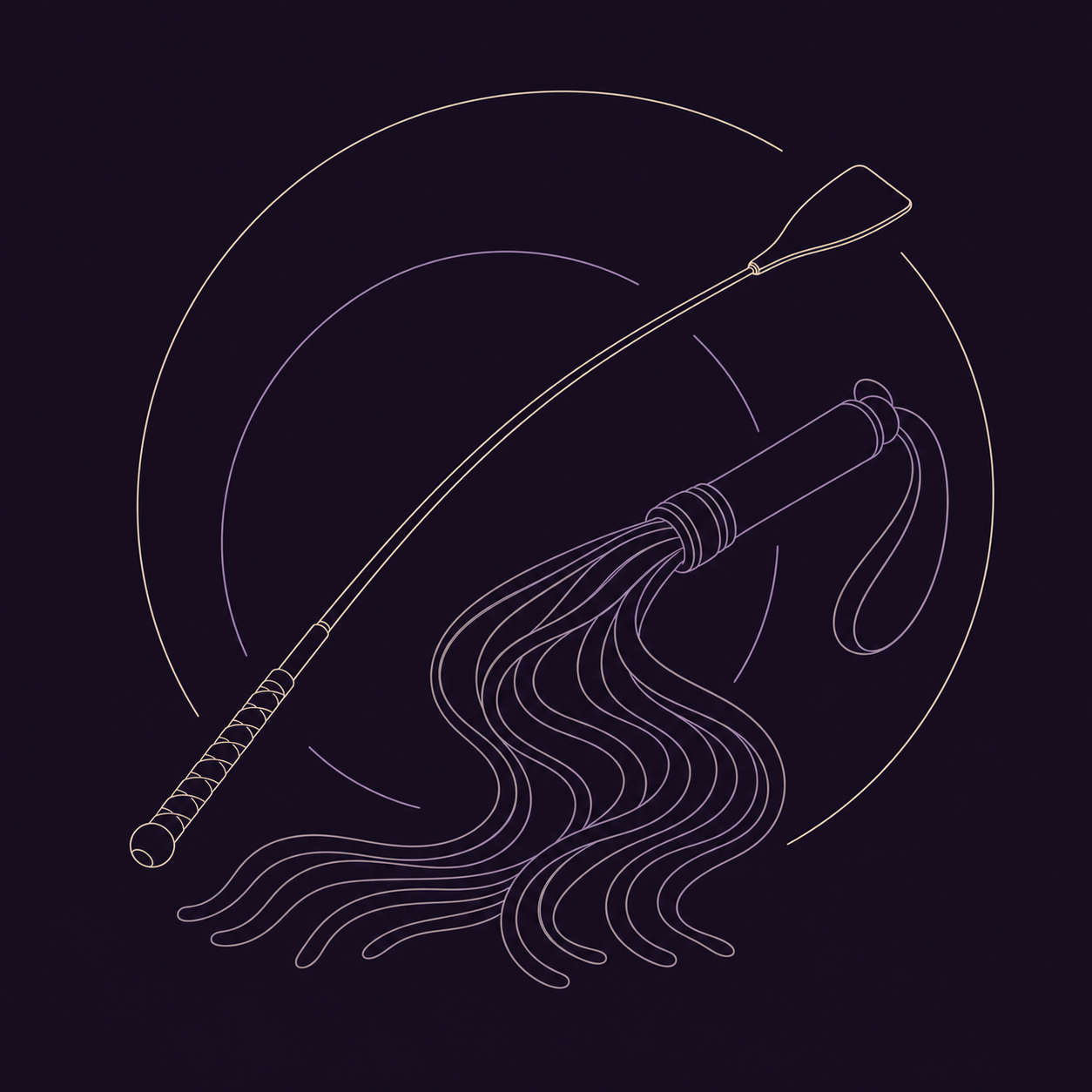
Caning uses a cane or similar rigid implement to create sharp, concentrated impact. Compared with broader impact tools, it tends to be more exact and more intense per strike, which is why it is generally treated as a higher-risk form of impact play. In a consensual adult scene, the focus is usually on negotiated sensation, trust, and control—not on forcing endurance or chasing marks.
What it is distinct from
Caning is more precise and sharply focused than spanking and is often different from flogging, which usually spreads impact over a broader surface. It is also distinct from punishment-only imagery: in BDSM, it is a negotiated adult activity, not actual discipline unless all adults explicitly agree to that dynamic.
Common variations and contexts
- Single-tool impact scenes with a cane as the main implement
- Role-based scenes where the cane is part of a teacher/corrector or authority fantasy between consenting adults
- Mixed impact scenes that combine caning with softer warm-up play or other negotiated sensation
- Light-to-moderate sensation scenes versus marking-focused scenes, depending on the adults involved and their agreements
Why people may explore it
People may explore caning for the crisp sensation, the ritual of setup and negotiation, the visible marks it can create, or the psychological edge of precise impact. Others enjoy it as a disciplined, technically focused form of BDSM that emphasizes restraint, timing, and trust.
Consent and communication
All participants should be consenting adults, with explicit prior agreement about the tool, body areas, intensity range, mark tolerance, safewords or stop signals, and whether photos or recording are allowed. Consent should be informed, enthusiastic, and revocable at any time. Because caning can escalate quickly, it is wise to discuss what will end the scene immediately, what counts as a check-in, and what aftercare is needed afterward.
Words someone might use
‘I’m interested in cane play with clear limits and a stop signal.’ ‘Light to moderate only, and not on joints, spine, face, or other vulnerable areas.’ ‘I’m okay with marks within our agreed limit, and I want a check-in after each set.’ ‘If I say stop, everything stops right away.’
Safety and risk awareness
Caning is higher risk because the cane concentrates force and can bruise, break skin, or injure underlying structures if used carelessly. Avoid any area with higher vulnerability, and be especially cautious around the head, neck, spine, kidneys, joints, and other sensitive zones. Intoxication, fatigue, emotional overwhelm, and rushing are all poor matches for this activity. Use a cane only with strong communication, clear boundaries, and a commitment to stop immediately if pain changes character, numbness appears, or the receiver asks to stop. If there is any concern about injury, seek appropriate medical care. Caning should never be used as a substitute for punishment or coercion outside of consensual adult roleplay.
Aftercare and follow-up
After caning, many people benefit from a calm landing period: water, warmth, a chance to decompress, and reassurance. Check the skin and overall comfort level, and discuss what felt good, what felt too much, and whether any marks need attention. Emotional aftercare can be just as important as physical care, especially if the scene involved strong anticipation, vulnerability, or authority themes.
Common misconceptions or contested usage
A common misconception is that caning is just ‘spanking with a harder toy.’ In practice, it is a distinct form of precise impact that often needs more control and planning. Another misconception is that visible marks mean the scene was better; marks are not a success metric and can increase risk. Some communities also use ‘caning’ metaphorically for punishment roleplay, but in educational context it should be understood as a negotiated adult kink activity. For fantasy-only intensity without physical risk, people may choose verbal roleplay, pose-and-anticipation, or non-impact authority scenarios instead.
Sources and further reading
- Planned Parenthood: Sexual Consent — A clear, accessible overview of consent as active, reversible, and specific.
- NCSF Consent Counts — Useful for kink-specific consent principles, including explicit prior permission.
- American Counseling Association: Kink Culture — Provides a professional overview of kink as consensual negotiated activity.
- Scarleteen Sex Readiness Checklist — Helpful for assessing readiness, communication, and boundary-setting.
Editorial note: This entry was prepared and maintained by the Orgasmaphoria editorial team. It is educational, applies only to consenting adults, and is not an instruction manual or medical guidance. No specialist credential is claimed unless a named qualified reviewer is explicitly shown.
Last reviewed July 28, 2026
Report a correction or source concern