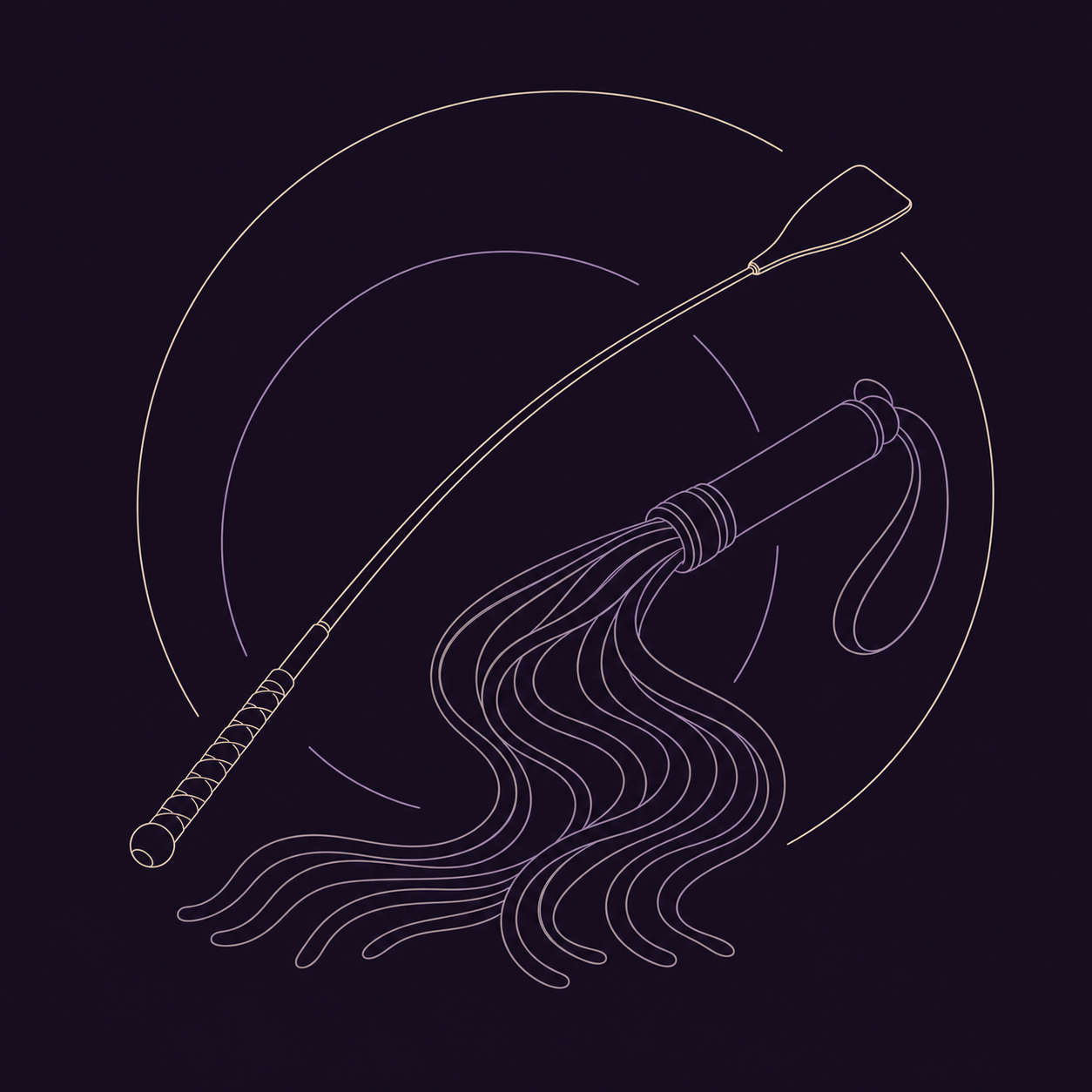
Also known as: foot whipping, sole impact
Advanced riskWhat is Bastinado?
Bastinado is foot-focused impact play: a negotiated scene in which the soles are struck as the erotic or power-exchange element. In practice, it is less about ‘how hard can it go’ and more about whether all participants have clearly agreed on the why, the where, the limits, and the stop conditions. Because the feet are central to balance and mobility, this is not a casual beginner activity. Even when a scene stays within agreed intensity, the recipient may have trouble standing, walking, or wearing shoes afterward, so the scene should be treated like an activity with real physical consequences, not just a spicy variation of spanking.
What it is distinct from
Distinct from general spanking or paddling because the target area is highly sensitive and functionally important. It is also not the same as medical foot care, reflexology, or a foot fetish, though it may overlap with foot-focused interest or dominance/submission play.
Common variations and contexts
- solo foot-focused domination/submission scenes between consenting adults
- paired scenes using implements or hands on the soles only
- foot-worship or foot-fetish dynamics that may or may not include impact
- historical or roleplay references to punishment scenes, used symbolically rather than literally
Why people may explore it
Some adults are drawn to the intense sensation, the vulnerability of having feet targeted, the symbolism of punishment or control, or the contrast between a small body area and a strong power-exchange dynamic. Others like it because it can create a clear psychological ‘scene’ with obvious roles, strong negotiation, and a distinct aftercare need. For some, it is also part of a larger foot-focused fetish or dominance/submission interest.
Consent and communication
All participants should be consenting adults, and consent must be explicit, informed, and specific to the feet, the intended intensity, the tools used, and any limits around duration, force, and medical conditions. Because this is edge/advanced-risk play, pre-negotiation should include what will happen if pain escalates, if the person cannot stand, or if there is numbness, tingling, or lingering swelling. A stop signal that is instantly respected is essential. No one should be pressured to ‘tough it out,’ and consent can be withdrawn at any time.
Words someone might use
‘I’m interested in a foot-impact scene with you, but only if we keep it clearly negotiated and stop at the first sign of numbness or trouble walking.’ ‘My limit is no marks that affect work or mobility, and I want you to check in often.’ ‘We’re both adults, we’ve agreed on the intensity, and either of us can stop the scene immediately.’
Safety and risk awareness
This is advanced-risk because the soles are sensitive and the feet are necessary for standing, balance, and daily movement. Avoid any scene if either person is impaired, injured, or unable to communicate clearly. Watch for bruising, swelling, numbness, tingling, sharp or lasting pain, skin breakdown, or difficulty bearing weight. If symptoms persist or function is reduced, seek medical care. Because this is not a casual-impact area, use conservative limits, clear communication, and a hard stop if anything feels wrong. Do not combine with intoxication or with situations that would make it hard to assess injury.
Aftercare and follow-up
Aftercare should include a calm check-in, sitting or lying down if standing is uncomfortable, hydration, and time to assess pain and mobility before anyone leaves. Help with shoes, transport, or walking if needed. If there are visible marks, keep an eye on them over the next day or two. The receiver may need reassurance that reduced mobility or soreness is expected and that reporting discomfort is welcomed, not a failure.
Common misconceptions or contested usage
A common misconception is that bastinado is ‘just another impact toy’ and therefore beginner-friendly. It is not; the soles are a high-sensitivity, functionally important area. Another misconception is that more force equals better play, when in fact foot-focused scenes usually depend more on communication and restraint than on intensity. The term may also be used historically to describe punishment rather than consensual kink, so in educational or scene-planning contexts it is best framed clearly as negotiated adult play.
Sources and further reading
- Planned Parenthood: Sexual Consent — Clear overview of consent as freely given, informed, reversible, and specific.
- NCSF Consent Counts — Kink-specific consent framework emphasizing explicit prior permission and ongoing negotiation.
- American Counseling Association: Kink Culture — Professional resource on consensual BDSM dynamics and informed, revocable consent.
- Scarleteen Sex Readiness Checklist — Practical communication and readiness guidance for negotiating sexual activities and boundaries.
Editorial note: This entry was prepared and maintained by the Orgasmaphoria editorial team. It is educational, applies only to consenting adults, and is not an instruction manual or medical guidance. No specialist credential is claimed unless a named qualified reviewer is explicitly shown.
Last reviewed July 28, 2026
Report a correction or source concern