
Partner exchange is nothing new.
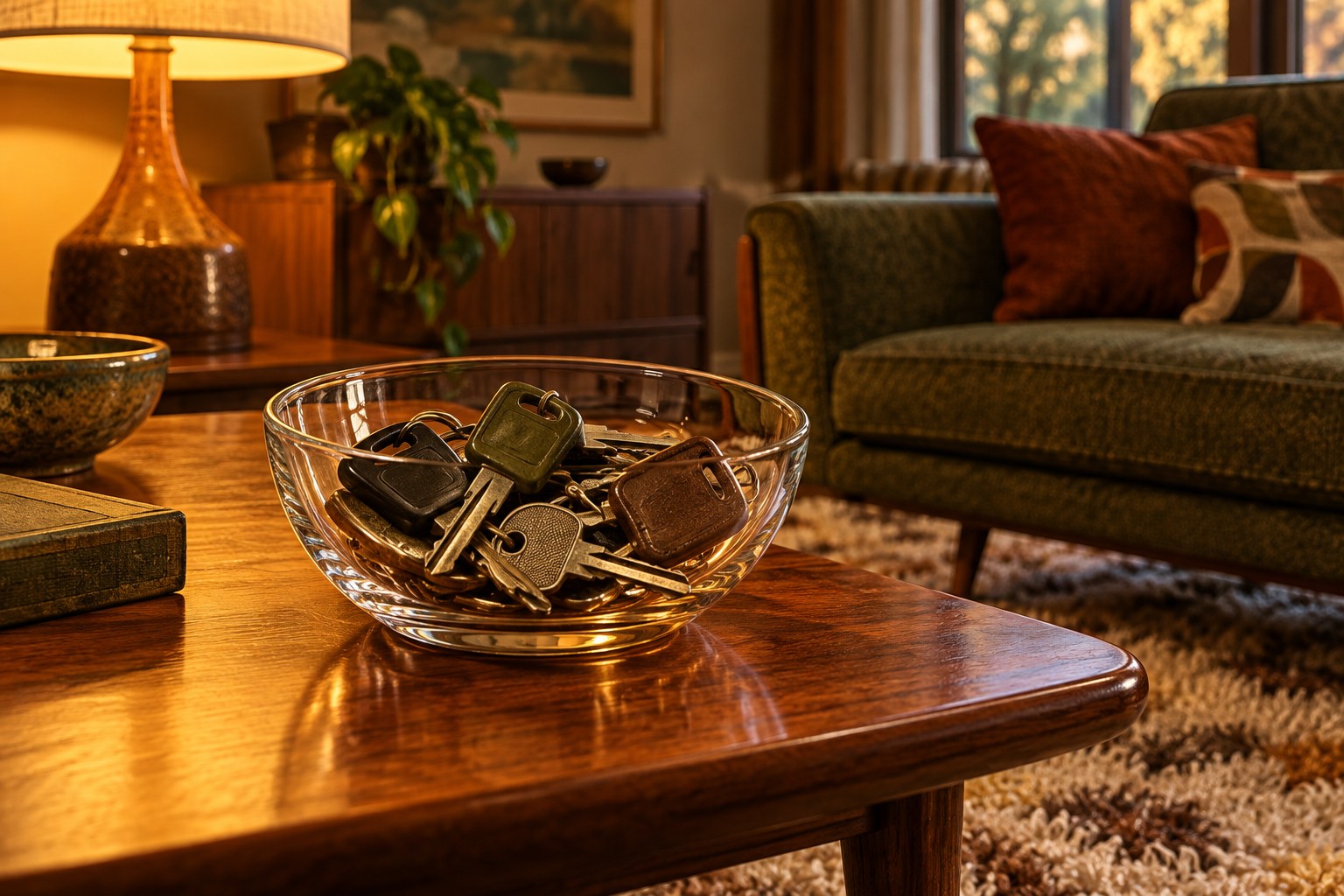
Long before anyone dropped a set of house keys into a bowl on a suburban coffee table, people were already inventing ways to share access, reassign attention, or let chance decide who stood next to whom for an evening. Some of those arrangements were solemn and hierarchical. Some were playful. Some were about children and lineage. Some were about the delicious awkwardness of being assigned a temporary sweetheart and then having to live with the assignment until the candles burned down.
The key party, the image that still floats through movies and dirty jokes like a half-remembered invitation, is a late, car-dependent expression of a much older itch. The itch is not complicated. Desire wants structure. Structure sometimes wants a little randomness so no one has to admit they chose.
We are not claiming an ancient sex lottery. The record does not give us that, and we will not invent it. What the record does give us is more interesting: exclusive ownership of a partner’s body has never been the only story humans have told about marriage, and chance has long been used as a social technology for connection, even when the connection stopped at a poem, a kiss, or a night of charged conversation.
Older arrangements, different rules
In the literary accounts of classical Sparta, arranged spouse-sharing appears as a procreative strategy rather than a party game. Xenophon, Polybius, and Plutarch preserve versions of the idea: an older husband might introduce another man, or (with permission) another man might be brought in to father stronger children. These are reports of planned, often hierarchical arrangements attributed to custom or lawgiver. They are not drawings of lots. They are not evidence that every wife consented in the modern sense. They are evidence that the historical imagination has, for a very long time, contained the possibility that one man’s exclusive sexual claim on one woman was not the only available design.
That is the modest, useful point. People have been negotiating (or imposing) non-exclusive arrangements for centuries. The twentieth-century American key bowl did not invent the category. It only gave the category a prop that required an automobile, or a set of house keys.
When chance gets to play host
Randomness itself has a longer social résumé than the key party.
In early modern England, Valentine customs sometimes used lots to assign temporary courtship roles. A name drawn from a hat could make someone your Valentine for the day or the season. Poems, gifts, dancing, and the expected performance of preference followed. Samuel Pepys records one such draw: his wife had pulled Mr. Hill the night before; it “proved not”; she later challenged him. The diary entry is social, not sexual. A mid-seventeenth-century letter preserves an unnamed woman’s crisp preference for choice over chance. She would not couple herself by lot if she could help it. The language was already available. The ritual could stage a connection without forcing anyone to declare, in front of the room, I picked you because I want you.
Nineteenth-century parlour games kept the formal idea alive in lighter form. Instruction books describe kissing forfeits mediated by folded papers, personal objects, or a blindfolded caller. A role is assigned. A kiss is owed. Refusal sometimes costs a forfeit. These are games of flirtation and comic penalty, not contracts for the night. Still, the structure is recognizable: an object enters a rule-governed system, uncertainty does some of the social work, and contact becomes easier to explain because chance can be blamed instead of appetite.
Our reading is not that these customs were secret sex parties. It is that humans have repeatedly reached for lottery and lot as a way to make the first move feel less like a naked confession. Chance can be a kind of manners. It can also be a way of keeping desire slightly deniable. Whether anyone in those rooms felt less guilty, more free, or simply more entertained is a question the sources do not answer. We can notice the pattern without turning it into a textbook.
Then the keys arrived
By the middle of the twentieth century the prop updated itself.
In May 1964, the underground magazine The Realist published an essay by the sexologist Albert Ellis. In it he describes clubs of a dozen or more couples placing car keys in a common pile so that husbands could be randomly matched with other members’ wives. The description is concrete, almost casual. It is also, on the evidence we have, a claim rather than a verified event log. Ellis names no clubs. He offers no method by which he knew the practice. He adds that he does not consider overt wife-switching “terribly common.” That last line is his opinion, not a survey result.
A separate note from the magazine’s editor appears after the essay and asks readers to send their own accounts. A request for letters is not the same thing as a stack of confirming replies. The inspected pages of the essay do not use the exact phrase “key party.” The car-key description in May 1964 remains the earliest direct mechanism account we have located.
Later tellings rearrange the furniture. Sometimes the women draw. Sometimes the night is remembered as a theme event with locks and keys that did not necessarily end in anyone leaving together. When anthropologist Katherine Frank went looking for the classic ritual in her own research, the trail thinned almost to nothing. No invitation she accepted. No reliable firsthand participant account she could stand behind. She still left room for the possibility that individual nights had happened somewhere, under some roof, with some version of the bowl. The image stays vivid. The documentary footing does not.
We separate three things that culture prefers to blend:
| Question | What the record allows |
|---|---|
| Mechanism | The mechanism, keys used for random pairing, was described in print by 1964. |
| Label | The label “key party” is harder to pin to a first use; the 1964 essay does not supply it. |
| Practice and its frequency | The practice and its frequency remain unproved. Absence of verified testimony is not proof that no one ever did it. Presence of a vivid description is not proof that it was standard Saturday-night procedure in the suburbs. |
Why the image refuses to leave
The bowl is almost unfairly good at its job. It turns the complicated, slightly terrifying question of who wants what, with whom, and under which boundaries into a single glittering object. In the story’s staging, negotiation can seem to dissolve into luck. Responsibility can look like it was left in the other room with the coats. That is an interpretation of the image, not a claim about what real people felt when, or if, they reached into the bowl.
There is also a gendered ghost in the earliest printed version. Husbands select. Wives are assigned. The grammar of the period does some quiet work. Later popular versions that put the draw in women’s hands may be evolving legend, different local games, or simple correction. We cannot settle the evolution from the present record. The prop is flexible enough to absorb changing ideas about who gets to choose.
Our hypothesis, clearly labeled as ours and not as science, is that the key party endures less because it was common and more because it is legible. Culture can film it in one shot. A joke can land in one sentence. The actual work of consensual non-monogamy (conversation, vetoes, aftercare, the unglamorous logistics of desire) does not compress as cleanly. So the prop keeps getting hired for the role.
Fantasy has never really put it down. Amateur erotic fiction still spins new versions of the night; the premise is simply too easy to recognize. Adult film has titled whole features around it. Paul Thomas’s Key Party for Vivid (2004) built an entire swinging-feature plot on the fishbowl and the anonymous draw. None of that is evidence of how often real living rooms matched the legend. It is evidence that the image still works on the nervous system. People keep wanting the charge of structured chance even when the historical record stays thin.
What the record allows, and what we do with the prop anyway
Partner exchange belongs to a long human repertoire. Chance has been used, for centuries, to stage connection that may or may not become erotic. The specific technology of the car-key draw appears in print in 1964 as a description, not as a verified national ritual. Whether any particular living room ever matched the legend remains, on the evidence we have, an open question. A key cannot stand in for an agreement. Randomness cannot replace a conversation.
“A key cannot stand in for an agreement. Randomness cannot replace a conversation.”
Here is where the history stops being only history for us.
Inside Orgasmaphoria we write and design event erotica that flirts openly with the key-party spirit (bowls, draws, sequenced games, the theatrical charge of not quite knowing who the next hour belongs to) while building the night around something the classic image almost never shows: a structured map of consent first. Couples name their jurisdictions before anyone reaches for anyone else. Soft-swap only. Same-room only. A firm no on a particular act. The games that follow are guided experiences inside a container that has already been spoken aloud. Chance gets to play. It does not get to overwrite the agreements.
Those pieces are fiction. They are not reportage of parties that happened exactly as written. They are a clear statement of what we are trying to build in the real rooms we open: a social environment organized for pleasure and desire, with consent declared early and kept visible, that still allows structured randomness and the erotic charge of guided surprise. The old prop is seductive because it collapses choice into an object. Our version keeps the object, or invents a cousin to it, and refuses the collapse. The draw can still spark the night. The conversation has to have happened first.
Partner exchange is old. Chance as a social technology is old. The twentieth-century key bowl is one stylish, automobile-era costume for both. What feels worth building now is a room where the costume can appear (playfully, theatrically, even a little wickedly) without pretending that luck was ever a substitute for a yes.
The interesting history is not the one that resolves into “it never happened” or “it was everywhere.” It is the one that keeps the appetite for structured sharing and the appetite for structured chance in view, and then asks what we actually do when the bowl is sitting there and the only thing that matters is the people in the room, looking at each other, deciding.
That part has always been harder to film. It is also the part that matters.
Continue Exploring on Orgasmaphoria
- The Swinging Reference: how partner swapping became a pop-culture shorthand.
- Swinging: the fuller guide to the lifestyle and its vocabulary.
- Partner Swapping: a specific practice, not a synonym for every swinging experience.
- Consent and Communication: the conversation no random draw can replace.
- Relationship Agreements: how negotiated arrangements differ from assumptions or infidelity.
Sources
- . If This Be Heresy… (wife-swapping discussion), pp. 19–21. The Realist, issue 50, .
- . The Myth of Key Parties. Medium, .
- . Diary entry: Wednesday 14 February 1666. The Diary of Samuel Pepys, .
- . Constitution of the Spartans, chapter 1, sections 7–9. University of Arkansas: classical text collection, .
- . Life of Lycurgus: marriage and procreation customs. MIT Internet Classics Archive, .

Member conversation
Comments
Comments are available to signed-in Voyeur members and above.
Sign in